⚠ VENOMOUS — MEDICAL CONCERN
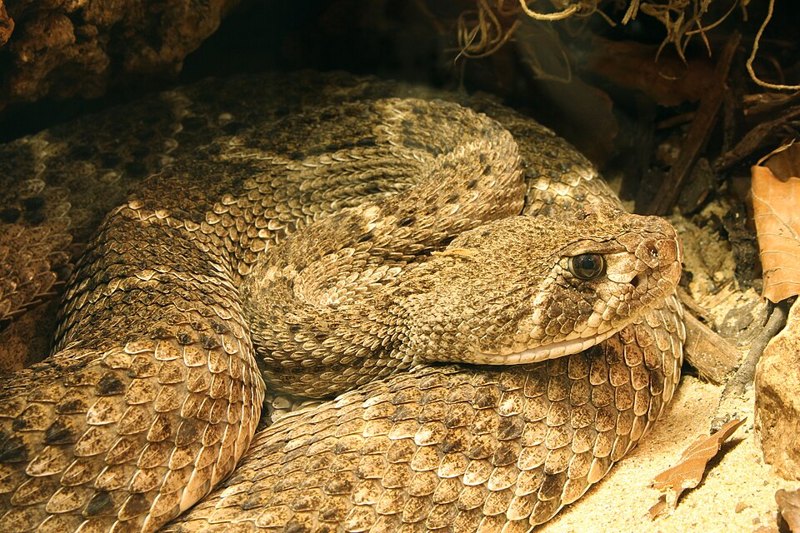
_Crotalus_atrox.jpg)
Western diamondback rattlesnake
Crotalus atrox
Dark back diamonds; contrasting black-and-white tail rings.
Widespread in open, rocky and brushy country.

STRIKE FAST FIELD GUIDE · CENTRAL TEXAS
Common snakes around New Braunfels, San Antonio, Austin and the Hill Country—with the venomous species clearly marked.
Only take a photo from a safe distance. Never approach, handle or corner a snake for identification.
32 snakes in this guide
A regional starting point, not an exhaustive species inventory. Some entries are less commonly encountered; habitat and county matter. Photos show examples—age, color and regional patterns vary. Tap any photo to enlarge. Head shape, pupils and color rhymes are not reliable safety tests.
KEEP YOUR DISTANCE
The first four species are the main local medical concerns; two additional regional rattlesnakes follow. A rattlesnake may not rattle before biting. Never assume a silent snake is safe.
Crotalus atrox
Dark back diamonds; contrasting black-and-white tail rings.
Widespread in open, rocky and brushy country.
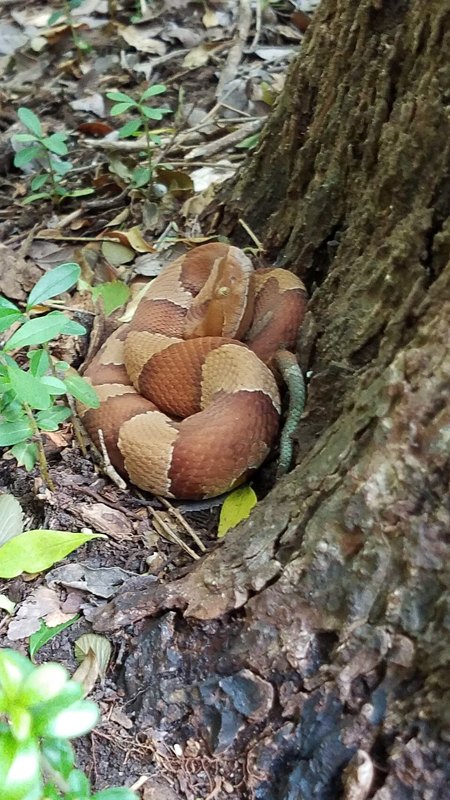
Agkistrodon laticinctus
Coppery coloring with broad, darker crossbands.
Woodlands, leaf litter and rocky cover.
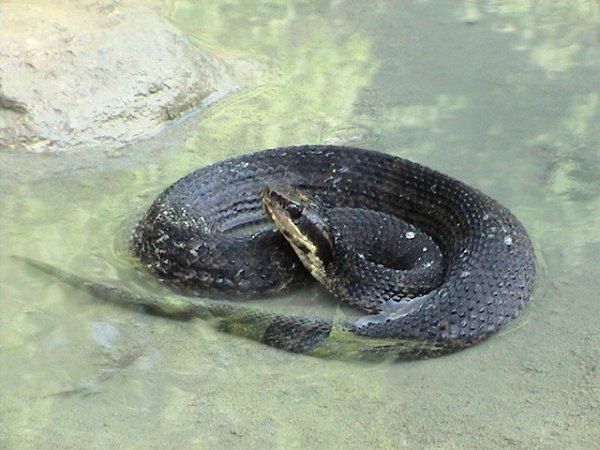
Agkistrodon piscivorus
Heavy-bodied; adults can look almost entirely dark.
Wetlands and waterways; distribution varies locally. Also called a water moccasin.
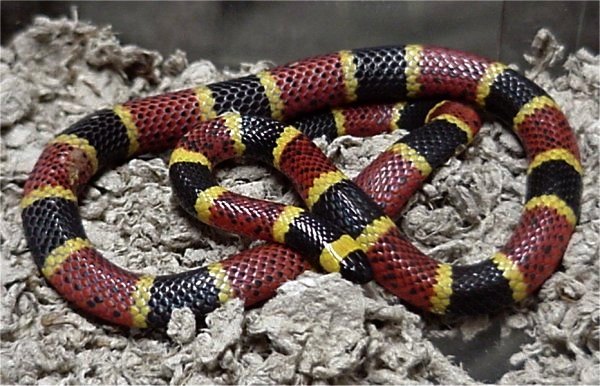
Micrurus tener
Red, yellow and black bands; small, rounded head.
Often concealed beneath cover. Never rely on a color rhyme.
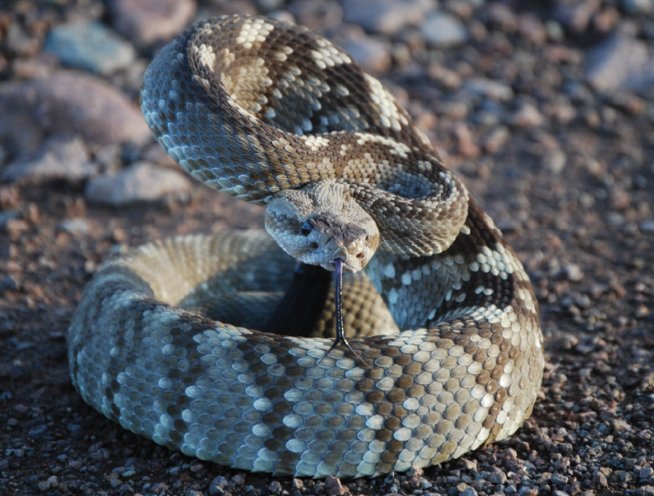
Crotalus ornatus
Dark tail; patterned body.
Less-common regional species in rocky Hill Country habitat.
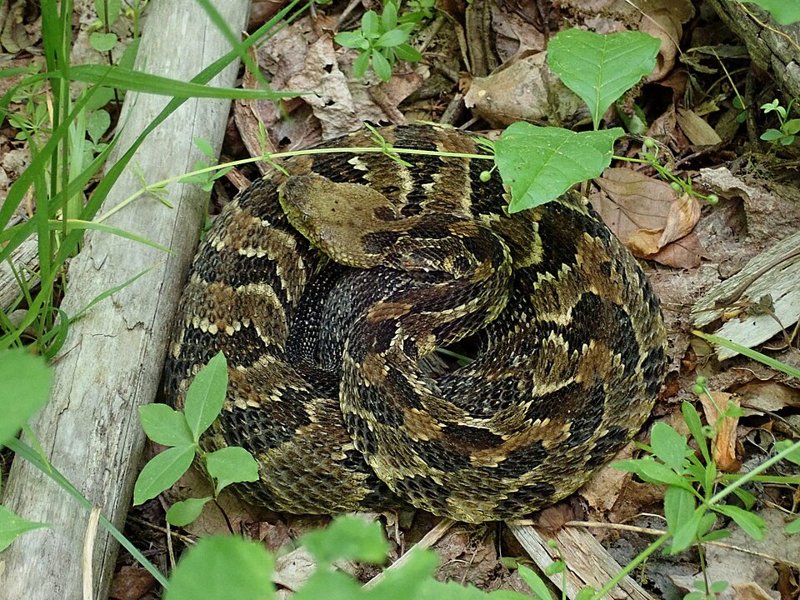
Crotalus horridus
Dark crossbands and a dark tail.
Regional eastern edge; wooded bottomlands farther east.
MORE LOCAL SPECIES
Most local snakes are not a medical venom concern, but any snake can bite. Hognose and ring-necked snakes have weak venom and are labeled separately. Garter and ribbon snakes are traditionally called nonvenomous, although they also produce mildly toxic secretions. “Nonvenomous” is not an invitation to handle.
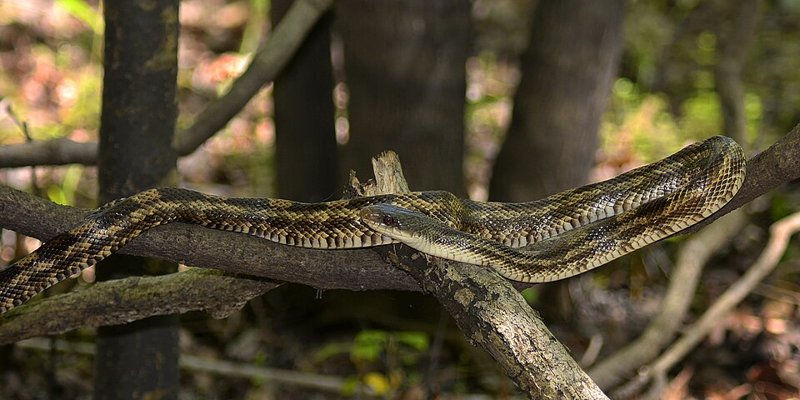
Pantherophis obsoletus
Large blotched climber; often called a chicken snake.
Yards, trees, barns and buildings.
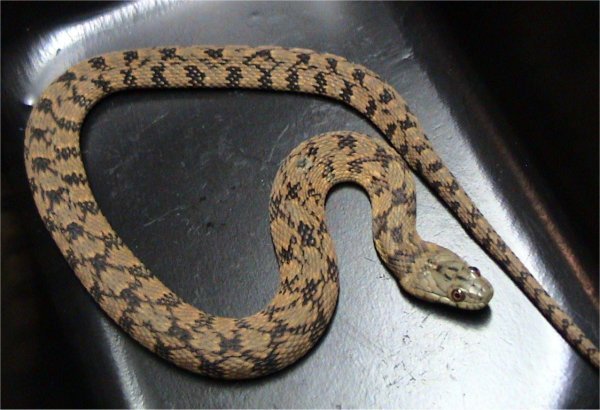
Nerodia rhombifer
Dark, linked back markings; frequently mistaken for cottonmouths.
Ponds, creeks and rivers.
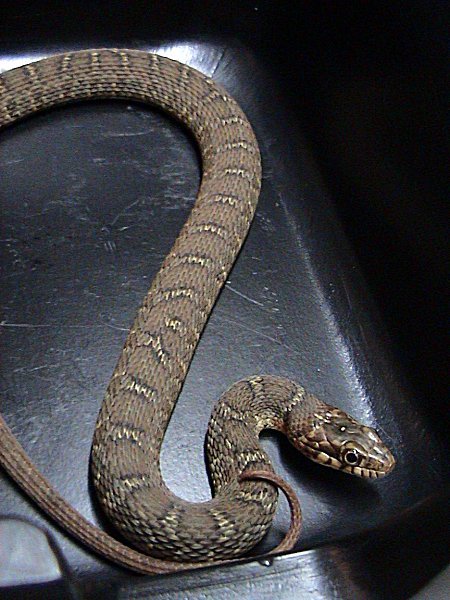
Nerodia erythrogaster
Young snakes are more distinctly patterned than adults.
Local waterways and nearby land.
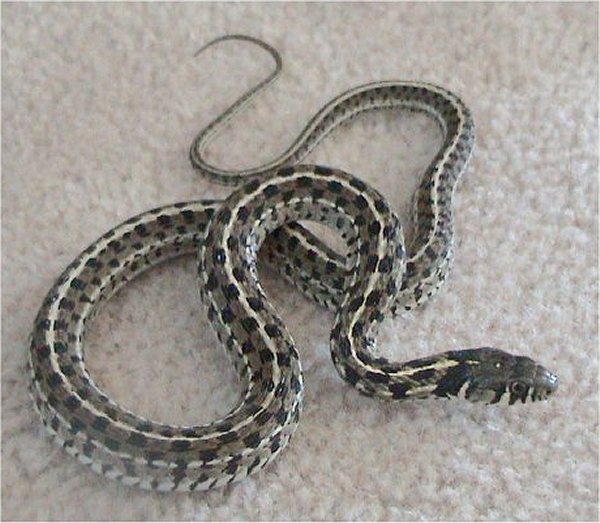
Thamnophis marcianus
Pale lengthwise stripes with a checkerboard pattern.
Gardens and damp areas.
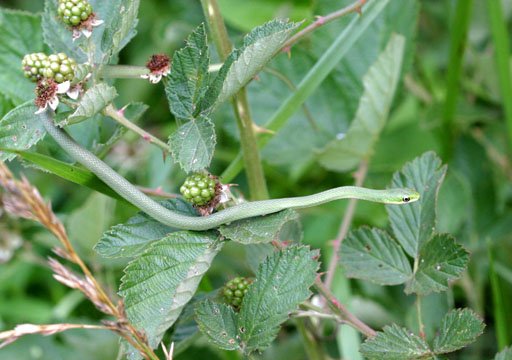
Opheodrys aestivus
Slender, bright green body.
Shrubs and other vegetation.
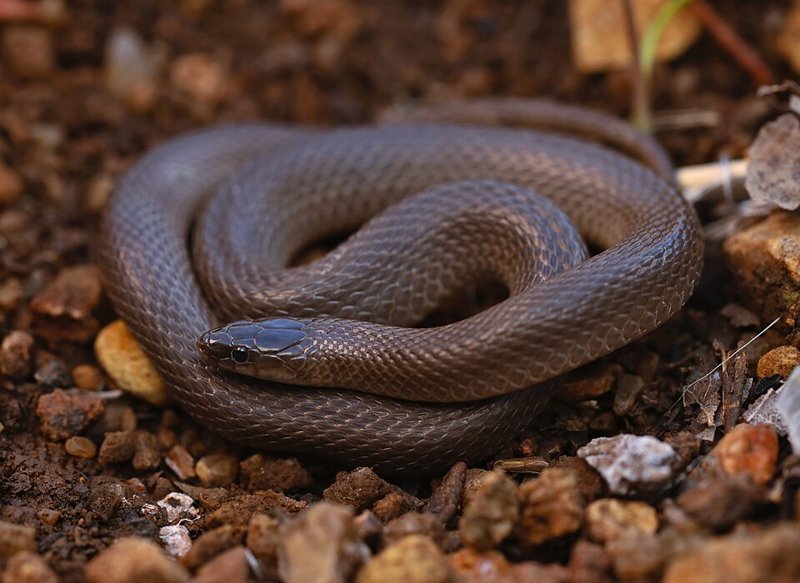
Haldea striatula
Tiny, plain brown burrower.
Lawns, gardens and soil.
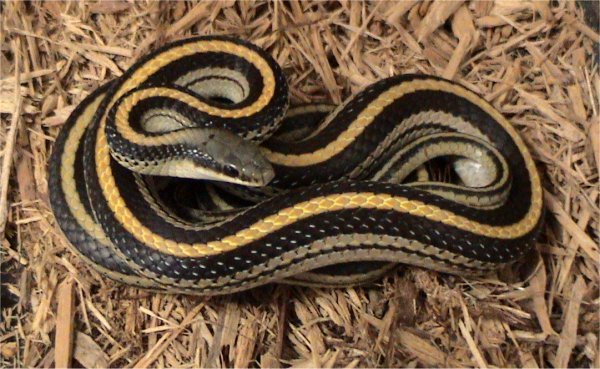
Salvadora grahamiae lineata
Striped body; enlarged scale on the nose.
Rocky and open habitat.
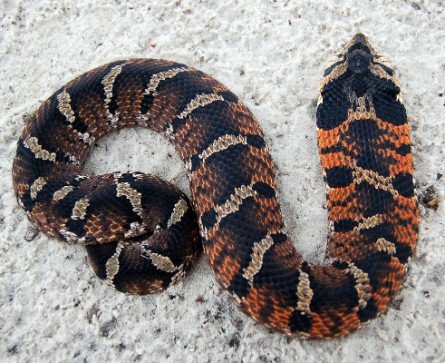
Heterodon platirhinos
Upturned snout; may flatten its neck or play dead.
Weak rear-fanged venom; bites can cause local reactions.
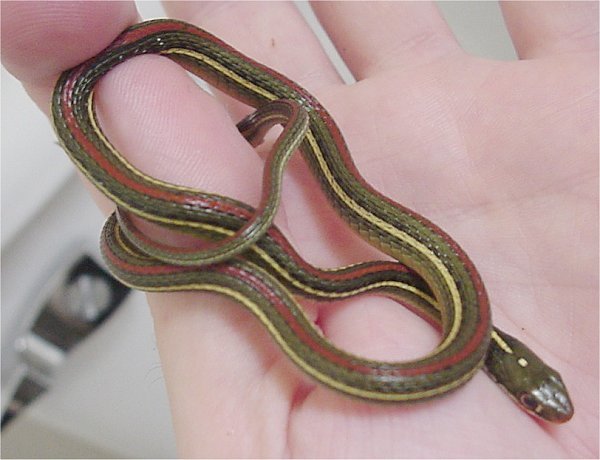
Thamnophis proximus
Slender, long-tailed and striped.
Often near water.
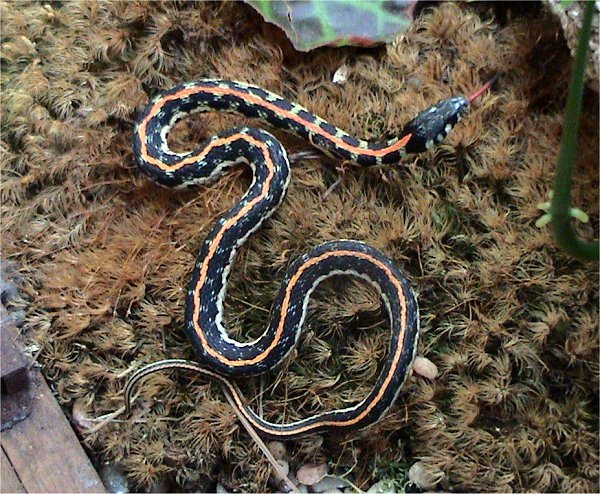
Thamnophis cyrtopsis
Stripes and dark neck patches.
Rocky streams.
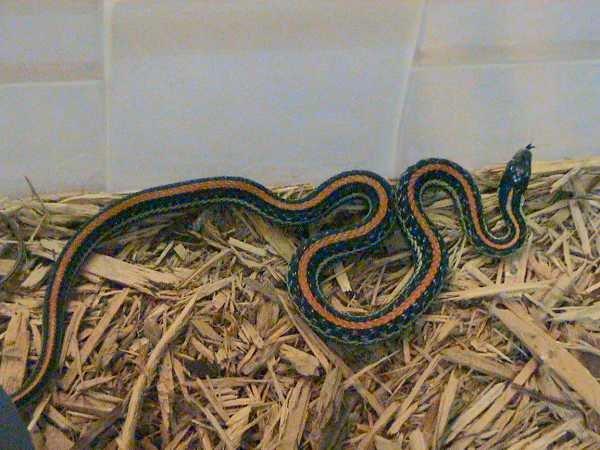
Thamnophis sirtalis annectens
Striped; less frequently encountered locally.
Damp habitat.
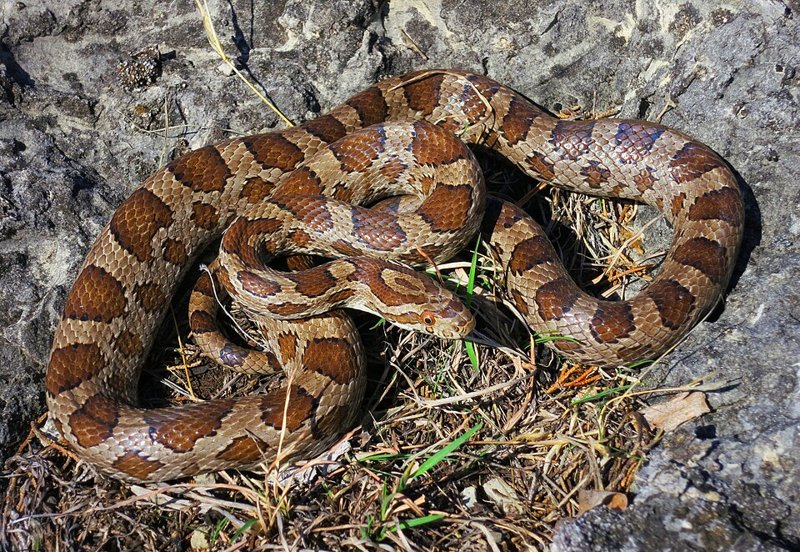
Pantherophis emoryi
Brown blotches on a grayish background.
Rocky or open country.
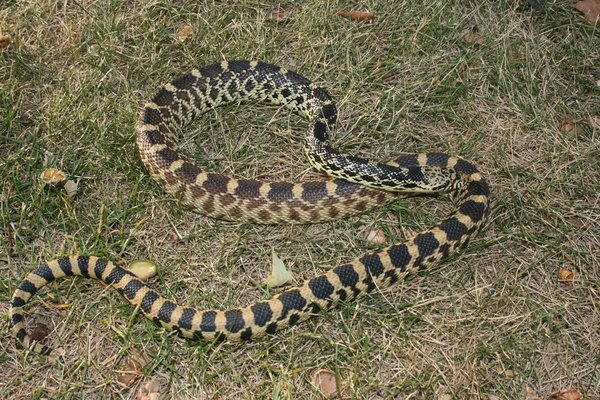
Pituophis catenifer sayi
Large, blotched snake; can hiss loudly.
Grasslands; less common around Austin.
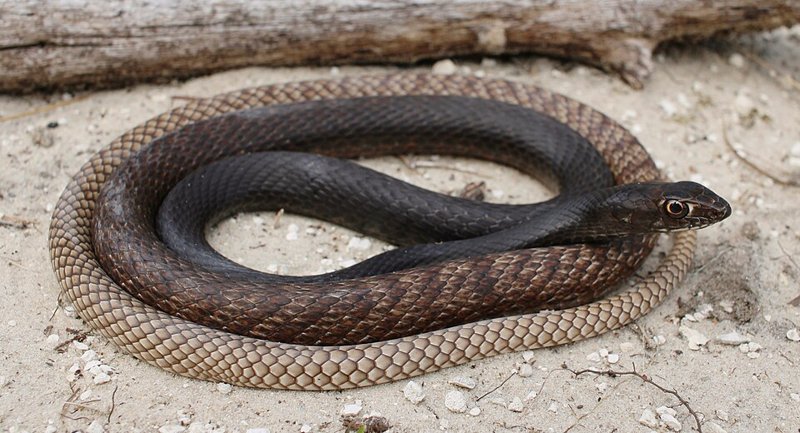
Masticophis flagellum
Long, slender; color varies considerably.
Open country.
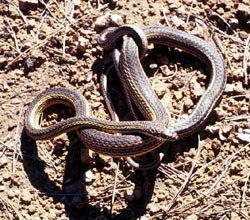
Masticophis taeniatus
Long body with pale side stripes.
Rocky country.
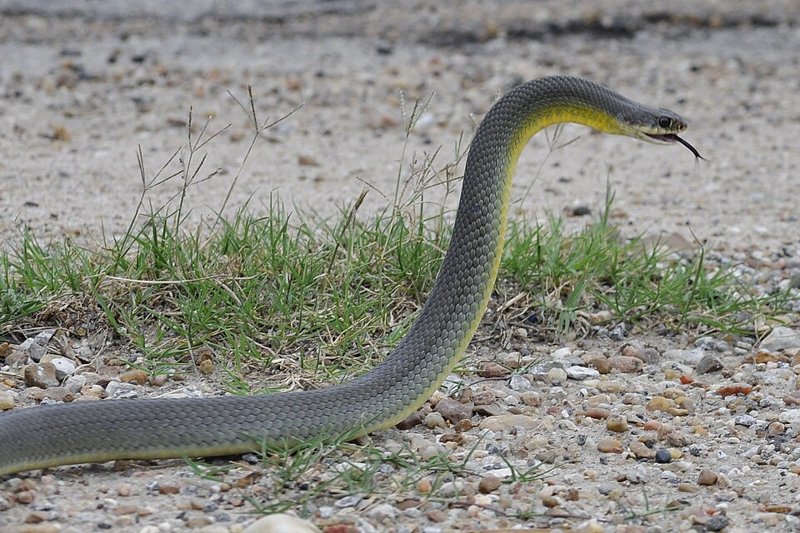
Coluber constrictor flaviventris
Adults are plain above; juveniles have blotches.
Open habitat.
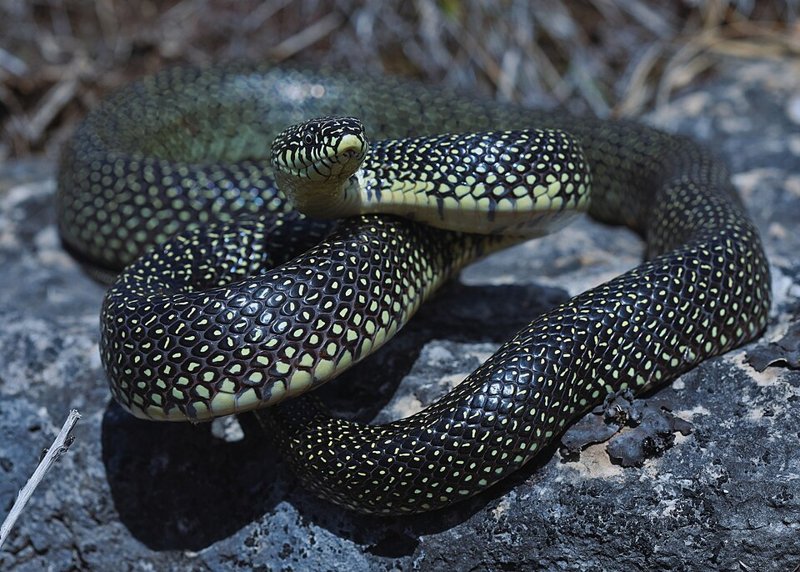
Lampropeltis holbrooki
Pale speckling against a dark body.
Varied habitat.
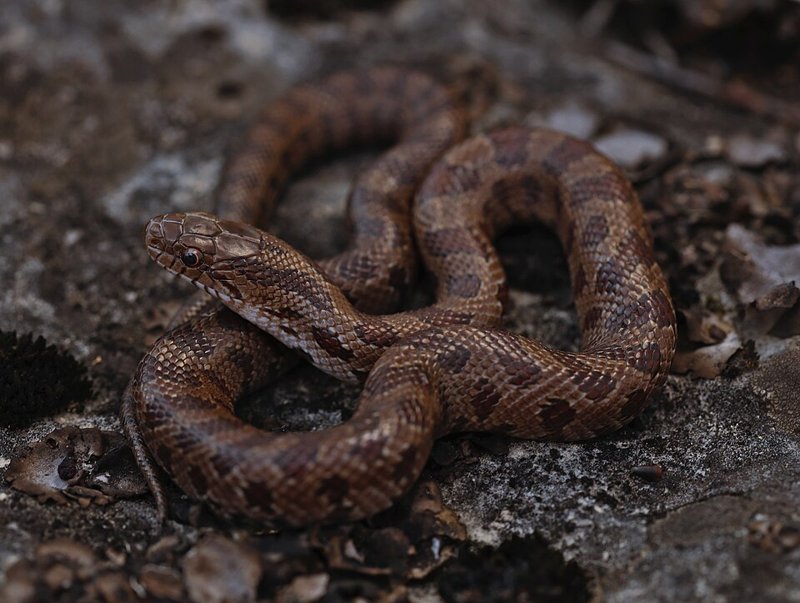
Lampropeltis calligaster
Brownish back blotches.
Grasslands.
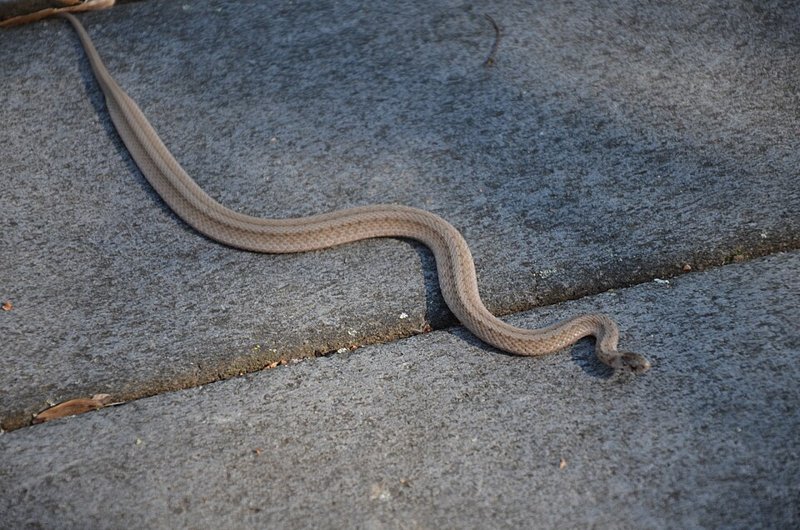
Storeria dekayi
Small, brown, with paired dark spots.
Gardens.
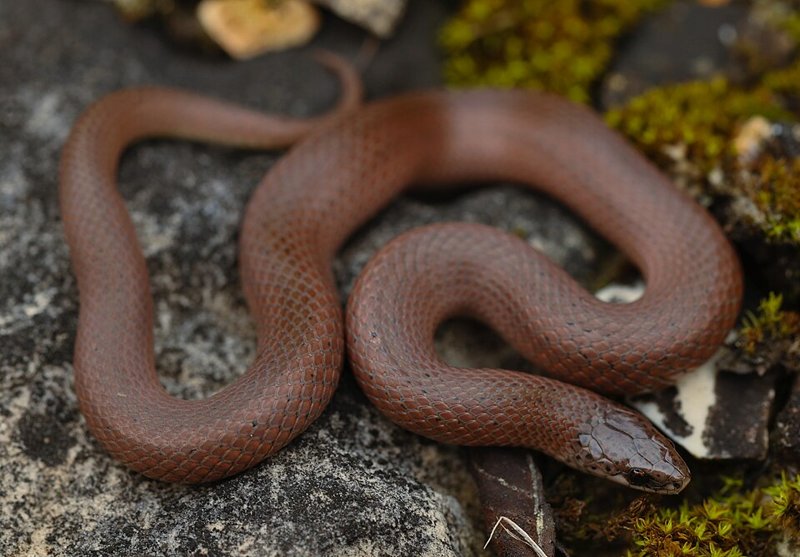
Virginia valeriae
Small and plain brown.
Soil and leaf litter.
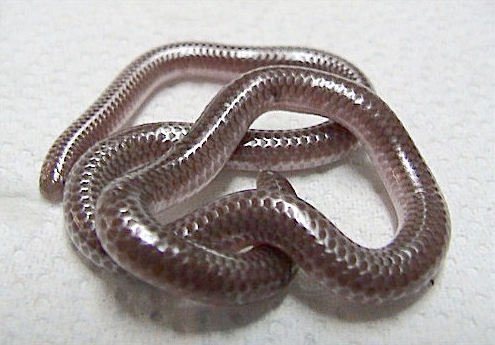
Rena dulcis
Tiny, shiny and wormlike.
Underground.
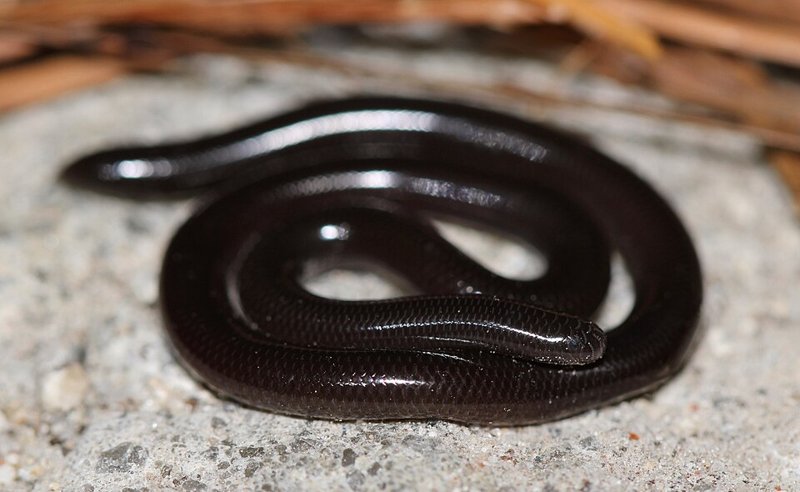
Indotyphlops braminus
Tiny, dark and wormlike; introduced species.
Plant pots and soil.
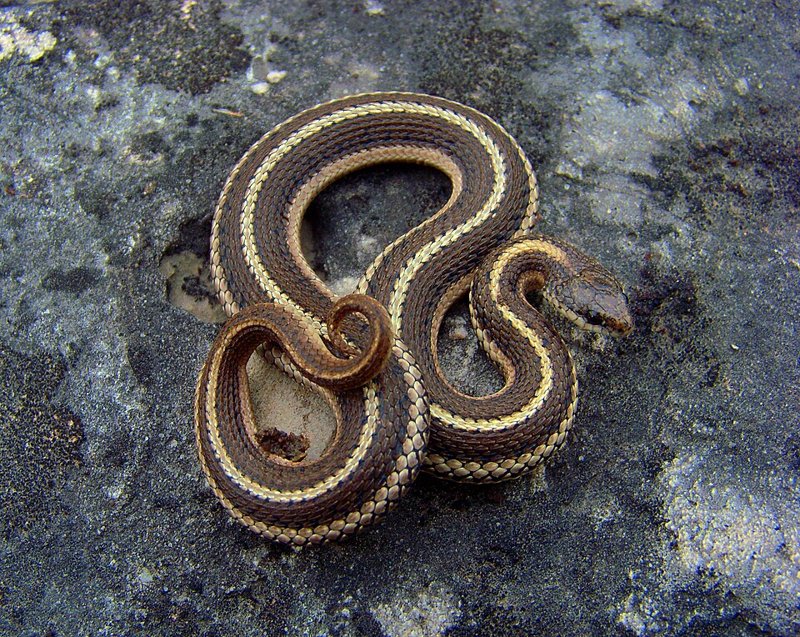
Tropidoclonion lineatum
Small with pale lengthwise stripes.
Grass and cover.
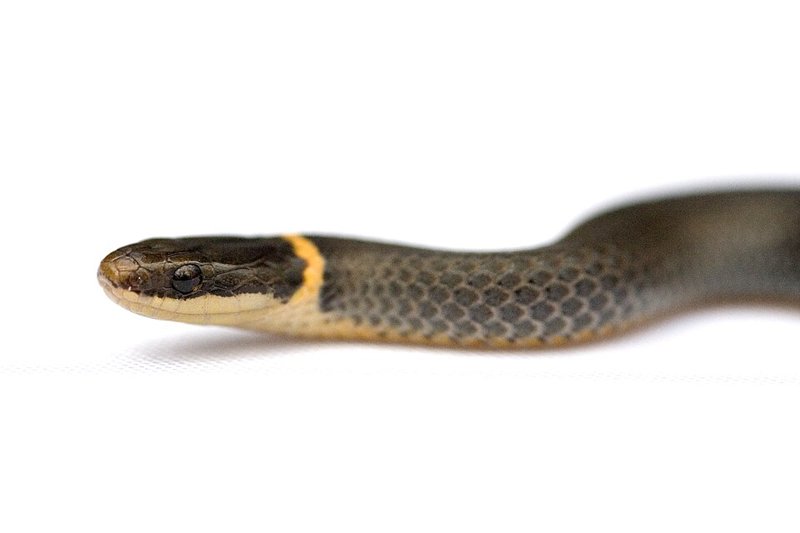
Diadophis punctatus
Small, dark body and contrasting neck ring.
Weak venom; not generally medically significant.
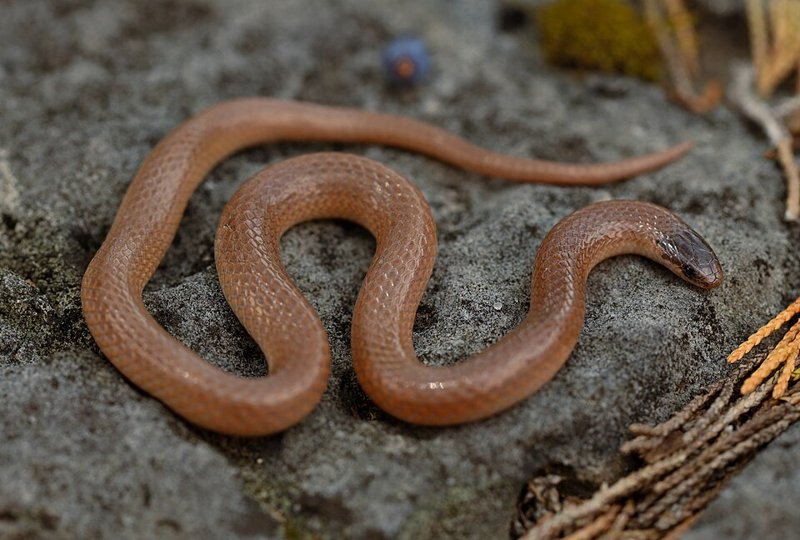
Tantilla gracilis
Tiny, tan body.
Under cover.
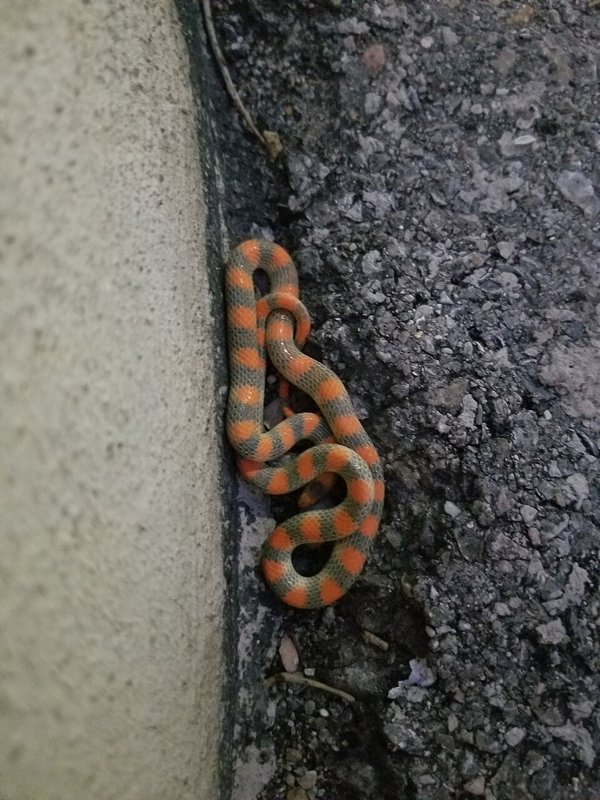
Sonora semiannulata
Small; colors and markings vary.
Rocky ground.
Try another name or a broader description. A missing match does not mean a snake is safe.
SNAKE ON YOUR PROPERTY?
Keep kids and pets away, give the snake room, and call Jesse for removal help. If you can safely keep track of its location from a distance, that helps.
Species selection draws on the Texas Master Naturalist Alamo regional guide and Texas EEB Club’s Austin guide. Venomous-species context: Texas Parks & Wildlife and CNAH. Additional species references: Herps of Texas and National Park Service. Emergency guidance: CDC/NIOSH. Photo credits and licenses appear below each image.
Educational reference, not a definitive identification service. Reviewed October 2026.


_Figure_7_(cropped).jpg)

_photographed_in_Liberty_Co.,_Texas._W._L._Farr.jpg)


,_zusammengerollt.jpg)


_(8726969667).jpg)

_Madden_Haag.jpg)

.jpg)
,_Abwehrhaltung.jpg)
_-_Flickr_-_2ndPeter.jpg)
.JPG)


.jpg)
_(8710343713).jpg)


